
For many aspiring entrepreneurs, owning a business sounds appealing, but managing one every day can be challenging. This is one reason franchise businesses have become an attractive option for people looking to create an additional income stream. Café franchises, in particular, offer the advantage of an established brand, standardized operations, trained staff, and the potential to benefit from repeat customers. These features can make it possible for an owner to step back from daily operations and focus on monitoring the business rather than running it personally. But how passive can a café franchise really be? Can you own and profit from a café without being there every day, or does successful ownership still require regular involvement and oversight?
What Is a Passive Income Franchise?
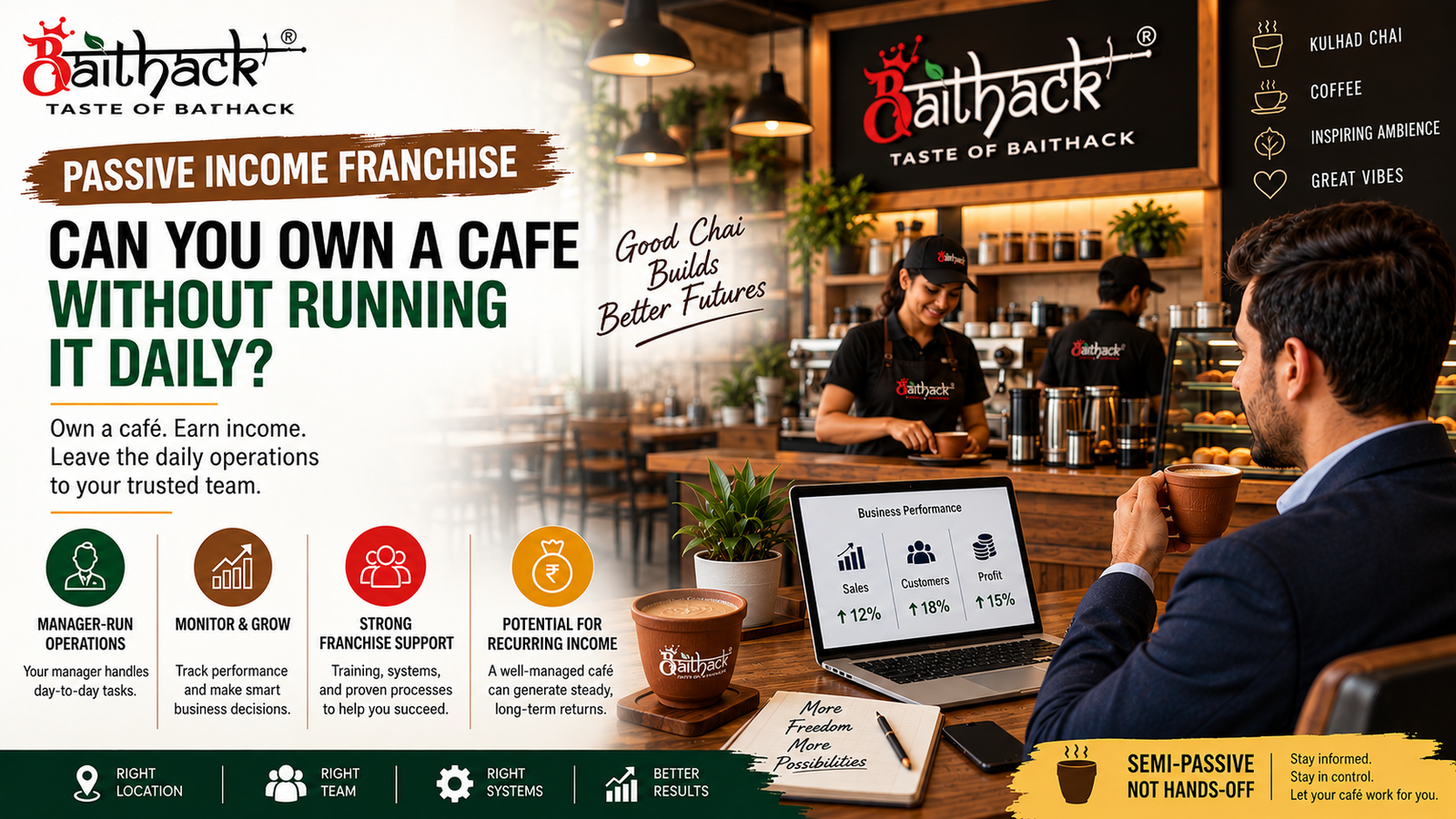
A passive income franchise is a business model where the owner does not need to handle the day-to-day operations personally. Instead, trained employees or a dedicated manager take care of routine activities while the owner focuses on monitoring performance and making important business decisions. However, it is often more accurate to describe this as a semi-passive franchise rather than a completely passive investment.
In an owner-operated franchise, the owner is actively involved in daily tasks such as managing staff, overseeing customers, and handling operations. A manager-operated franchise relies on a hired manager and team to manage these responsibilities. In a semi-passive franchise, the owner maintains periodic oversight while the management team handles daily operations. Therefore, “passive” does not mean zero involvement, it means less hands-on involvement.
Can You Own a Café Without Running It Daily?
Yes, it is possible to own a café without being involved in its daily operations, especially when you choose a well-established franchise with a proven business model. However, achieving this requires the right people, systems, and processes to keep the business running smoothly in your absence.
A reliable store manager is essential for overseeing employees, handling customer concerns, and managing everyday operations. Well-trained employees can then follow established standard operating procedures (SOPs) to maintain consistent service and product quality. Strong inventory and accounting systems are equally important for controlling costs, tracking stock, and monitoring cash flow.
Technology can make remote ownership easier by allowing owners to access sales reports, inventory levels, staff performance, and other key business metrics. In this setup, the owner’s role shifts from being an operator to a business overseer. However, the amount of involvement required will ultimately depend on the franchise model, location, management team, and overall business structure.
How a Manager-Run Café Franchise Works
A manager-run café franchise is designed to separate business ownership from daily operations. Instead of handling every task personally, the franchise owner builds a team to manage the café while retaining oversight of the business.
The franchise owner provides the initial capital, sets business goals, monitors financial performance, and makes important strategic decisions. The store manager is responsible for day-to-day operations, including managing staff, maintaining service standards, resolving customer concerns, and ensuring the café runs efficiently.
Meanwhile, employees handle routine responsibilities such as food preparation, billing, cleaning, order management, and customer service. The franchisor supports the business by providing the brand, training, operational guidelines, marketing assistance, and established processes.
Technology can further simplify remote ownership. POS systems, inventory management software, accounting tools, and digital sales reports allow owners to track revenue, expenses, stock levels, and overall performance without being physically present every day. This gives owners greater visibility while allowing the management team to handle on-site operations.
The Costs Behind a “Passive” Café Franchise
A café franchise may offer a more hands-off ownership model, but that convenience comes with additional costs. Before investing, owners need to account for the franchise fee, café setup and interior expenses, equipment, rent, and security deposit. Ongoing expenses can include staff salaries, inventory, utilities, maintenance, marketing contributions, and franchise royalty fees.
A manager-operated café also requires the owner to factor in a manager’s salary, which can be an important expense when calculating potential profitability. While hiring a manager reduces the need for the owner to be physically present every day, it increases the café’s operating costs.
For this reason, prospective franchise owners should evaluate the complete investment and recurring expenses, not just the initial franchise fee. A well-planned budget can help determine whether the convenience of a more passive ownership model makes financial sense.
Benefits of Owning a Manager-Operated Café Franchise
A manager-operated café franchise can offer several advantages for investors and professionals who want to build an additional income stream without managing the café every day.
- Less day-to-day involvement: A trained manager and staff handle routine operations, allowing the owner to focus on oversight rather than daily tasks.
- Flexibility to pursue other opportunities: Owners can continue with another job, business, or professional commitment while the café team manages operations.
- Established franchise brand: A recognized franchise can provide an existing brand identity, business model, and customer base, reducing the need to build a concept from scratch.
- Standardized processes: Established procedures for food preparation, customer service, inventory, and operations can help maintain consistency.
- Potential for recurring revenue: A café with steady customer traffic can generate regular sales, although revenue and profitability are never guaranteed.
- Professional management: An experienced manager can oversee employees, resolve operational issues, and maintain service standards.
- Easier remote monitoring: POS systems, sales reports, inventory tools, and accounting software can help owners track performance without being physically present.
The Risks of Treating a Café Franchise as Completely Passive
While a manager-operated café can reduce an owner’s daily workload, treating the business as completely passive can create several risks:
- Poor staff performance: Inadequate service, inconsistent product quality, or poor customer interactions can negatively affect the café’s reputation and sales.
- Employee turnover: Frequent staff changes can disrupt daily operations and increase recruitment and training costs.
- Manager-related risks: An inexperienced or unreliable manager can lead to poor decision-making, operational problems, or financial losses.
- Fluctuating sales: Revenue can vary based on location, customer demand, seasonality, and local competition.
- Unexpected expenses: Equipment breakdowns, repairs, maintenance, and rising operating costs can affect profitability.
- Financial and compliance oversight: Owners still need to review financial reports, monitor expenses, and ensure the franchise follows required standards.
Most importantly, a franchise does not guarantee profits or passive income. Successful passive ownership means delegating operations, not abandoning oversight. Regular monitoring and informed decision-making remain essential.
Is a Passive Café Franchise Right for You?
A passive or semi-passive café franchise may be suitable for investors who have sufficient capital and do not want to manage a café every day. It can be a good option for those who are comfortable hiring and managing a reliable team, understand the local market, and can regularly monitor finances and business performance. Owners should also have realistic expectations about potential returns and understand that profitability can vary based on factors such as location, competition, operating costs, and customer demand. However, this model may not be ideal for someone looking for completely hands-off income or guaranteed returns. Even with an experienced management team, franchise owners need to remain involved in overseeing the business and making important decisions.
Passive, But Not Completely Hands-Off
Owning a café without managing its daily operations is possible with the right franchise model, management team, and systems in place. However, it is more accurate to describe this approach as semi-passive rather than completely passive. The success of the café depends on factors such as its location, franchise support, manager, staff, and the owner’s ability to monitor performance. With effective delegation and regular oversight, owners can reduce their day-to-day involvement while still maintaining control. Ultimately, you can step away from daily operations, but you can’t completely step away from ownership.